Beyond the ceiling stain: how a leak became a data problem
Today’s commercial buildings need more than water sensors – they need intelligent monitoring that detects problems early, alerts the right people immediately, and integrates directly into existing building management systems.
In this conversation from Realcomm Live 2026, MultiTech Regional Sales Director Brandon Dalida and Edward Wagoner of Satya Consulting discuss how LoRaWAN® leak detection is helping building owners reduce risk, improve operational efficiency, and lay the foundation for smarter connected buildings.
Water Damage Is Still One of the Most Expensive Building Risks
Water leaks rarely begin as catastrophic failures.
Most start as small, unnoticed problems beneath sinks, above ceilings, around HVAC equipment, mechanical rooms, or pipe joints. Left undetected, these leaks can lead to:
- Expensive property damage
- Equipment failures
- Business interruption
- Tenant disruption
- Mold remediation
- Insurance claims
- Rising insurance premiums
Traditional inspections only capture issues when someone happens to find them. Connected leak detection provides continuous monitoring – 24 hours a day.
Smarter Leak Detection with LoRaWAN
Instead of relying on wired sensors or manual inspections, modern leak detection uses long-range, low-power wireless technology.
Benefits include:
- Long battery life (up to 10 years)
- Wireless installation with minimal disruption
- Coverage across large buildings and campuses
- Scalable deployments
- Low maintenance requirements
Because sensors communicate over LoRaWAN, hundreds or even thousands of monitoring points can be deployed without extensive wiring or ongoing maintenance.
Seamless Niagara Integration
For many facility teams, the challenge isn’t simply detecting a leak – it’s making sure the right people know about it quickly enough to take action. When building data is spread across multiple platforms, alerts can be missed, delayed, or require operators to constantly switch between different applications.
That’s why one of the most significant topics discussed in the interview was MultiTech’s new Niagara Driver. Rather than treating leak detection as a standalone solution, it enables data from LoRaWAN sensors to be brought directly into the Niagara Framework, where it can be viewed alongside other critical building systems.
For operators who already rely on Niagara to monitor HVAC, lighting, energy usage, and other building automation systems, this creates a more unified operational view. Leak events become part of the same workflows and dashboards that teams use every day, helping reduce complexity and improving visibility across the building.
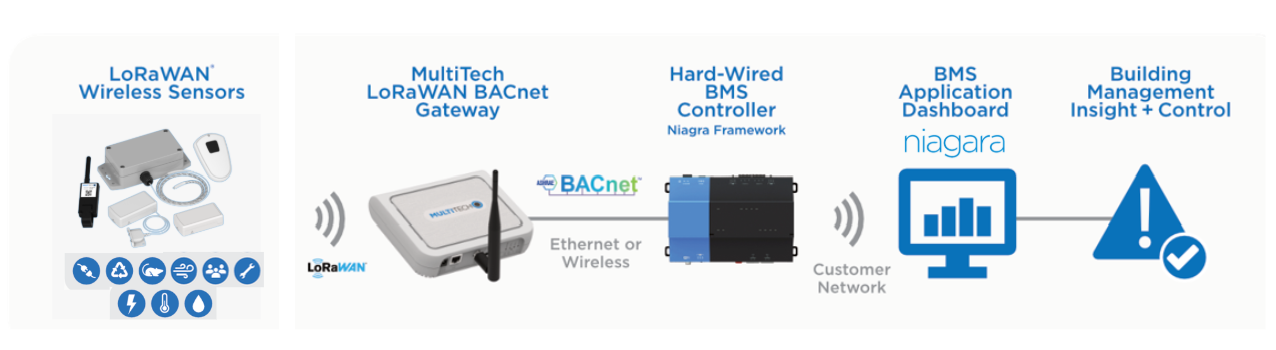
Integrating leak detection into an existing Building Management System also opens the door to smarter automation. A leak alert can be investigated more quickly, maintenance teams can be notified sooner, and operators have the context they need to respond before minor issues become costly repairs.
Instead of adding another application to monitor, facility teams can incorporate leak detection into the systems and processes they already know, making it easier to manage building operations from a single interface.
The Business Case
Connected leak detection isn’t just about preventing water damage – it’s about improving building performance.
Reduce Risk: Early alerts help minimize damage before a small leak becomes a major incident.
Improve Insurance Conversations: Better monitoring provides documented risk management practices that may support discussions with insurers.
Faster Response: Maintenance teams receive alerts immediately, reducing investigation time and limiting damage.
Lower Operating Costs: Wireless deployment reduces installation costs while long battery life minimizes ongoing maintenance.
Build Smarter Infrastructure: Once a LoRaWAN network is installed, the same infrastructure can support many additional building applications.
More Than Leak Detection
One of the most exciting themes from the discussion is what comes next. The same LoRaWAN infrastructure used for leak detection can also support:
- Occupancy monitoring
- Indoor environmental monitoring
- Energy management
- Asset tracking
- Predictive maintenance
- Equipment health monitoring
- Temperature and humidity sensing
Rather than deploying separate networks for every application, building owners can expand over time using the same connected infrastructure.
Frequently Asked Questions About Connected Leak Detection
What is connected leak detection?
Connected leak detection uses wireless sensors to continuously monitor buildings for signs of water leaks. When a leak is detected, alerts can be sent immediately to maintenance teams or integrated directly into a Building Management System (BMS), helping facilities respond before significant damage occurs.
How does LoRaWAN leak detection work?
LoRaWAN® leak detection uses low-power wireless sensors that communicate with a LoRaWAN gateway. The gateway securely transmits sensor data to monitoring software or a Building Management System, enabling real-time alerts without the need for extensive wiring.
Why is early leak detection important for commercial buildings?
Even small water leaks can cause costly damage if left unnoticed. Early leak detection helps reduce repair costs, minimise equipment damage, prevent mould growth, reduce downtime, and limit disruption to tenants or building occupants.
What are the advantages of wireless leak detection over wired systems?
Wireless leak detection systems offer several advantages, including:
- Faster and less disruptive installation
- Long battery life (often up to 10 years)
- Easy expansion as buildings grow
- Lower installation costs
- Minimal ongoing maintenance
This makes them particularly well suited for existing commercial buildings where installing new cabling would be expensive or impractical.
Is this solution suitable for large multi-site estates?
Yes. The MultiTech and Niagara solution is designed to scale from single buildings to hundreds of sites, with centralised data visibility and management through the Niagara platform.