This World Environment Day, the conversation has moved on from pledges and targets. The question now is simpler – and harder: can you actually prove it? Can you show, in real numbers, that your building is consuming less energy than it did last year? That your cooling systems respond to real conditions rather than fixed schedules? That you have the data to back up your ESG commitments?
At MultiTech, we believe meaningful climate action starts with meaningful data. And getting that data no longer requires a costly, disruptive cabling project.
Did you know...
Roughly 40% of global energy use comes from buildings
30% typical energy savings from real-time BMS optimisation
LoRaWAN® offers a range of up to 15 km, even through walls.
The gap between intent and insight
Most commercial and industrial buildings already have a Building Management System (BMS) – the control layer that governs heating, ventilation, cooling, and lighting. The problem isn’t the BMS itself. It’s the blind spots: the zones, floors, and assets it was never wired to reach.
Adding a sensor to an existing BMS traditionally meant a full cabling project – conduit runs, ceiling access, disruption, and a cost per sensor point that quickly runs into the thousands. The result? Buildings that are partially monitored at best, making optimised, data-driven energy management impossible.
The sensors doing the work
Proximity Sensors
Our Wireless Proximity Sensors detect open/close events on doors and windows, contact states, and object presence – giving your BMS the situational awareness to act on how a building is actually being used.
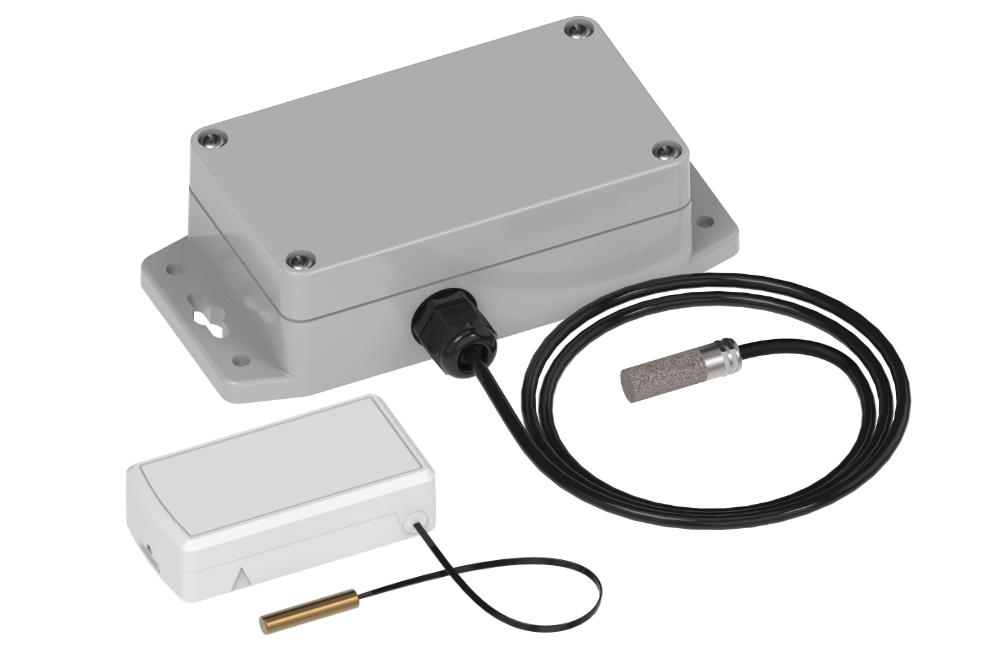
Temperature & Humidity sensors
Facilities still run HVAC on fixed timers, not real conditions – but our Wireless Temperature and Humidity Sensors change that, delivering live environmental data exactly where your BMS needs it, from plant rooms to remote storage areas.
Energy sub-metering sensors
Our Current Transformer measures actual kWh consumption at circuit or asset level. Critical for proving carbon reduction and ESG reporting, which is a key blog theme.


How LoRaWAN® + BMS closes the gap
MultiTech’s approach is to make wireless sensing a first-class citizen of your existing BMS infrastructure – not a shadow system running in parallel, but data flowing directly into the BMS layer your facilities team already uses.
1. Deploy wireless sensors anywhere
Battery-powered LoRaWAN® sensors monitor temperature, humidity, CO₂, occupancy, energy sub-metering, air quality, and leak detectionplaced in minutes, no cabling required. One gateway covers an entire building.
2. MultiTech Conduit® gateway receives and decodes
The Conduit family of LoRaWAN gateways, including IP67-rated outdoor models for external plant and rooftop equipment, capture all sensor data at the edge. Pre-built decoder support means sensors go live in minutes, not days.
3. mPower™ translates sensor data to BACnet/IP
MultiTech’s mPower edge intelligence platform, embedded in every Conduit gateway, includes a BACnet/IP server. Sensor readings are mapped to BACnet analog input objects and served directly to your BMS, SCADA, or energy management platform.
4. Your BMS acts on real data, not assumptions
Heating ramps up when occupancy sensors detect people entering – not on a timer. Cooling responds to actual hot-spot temperatures. Ventilation adjusts to measured CO₂ levels. Every decision is driven by live data from across the building.

The environmental case
This isn’t just about technology convenience. Every unmonitored zone is a source of waste. Heating an empty office suite all evening because there’s no occupancy data. Running chillers at full capacity because there’s no temperature sensor in the server room they’re meant to cool. These aren’t edge cases – they’re the norm in buildings built before wireless sensing was viable.
Closing those blind spots with LoRaWAN® sensors doesn’t just reduce energy consumption. It generates the timestamped, continuous measurement data that sustainability reporting frameworks (ISO 50001, ESOS, BREEAM, and corporate ESG disclosures) increasingly demand.

Lower embodied carbon in deployment
No copper cable runs, no conduit, no heavy installation labour. A wireless sensor has a fraction of the material footprint of a wired equivalent.

Real-time energy optimisation
BMS systems acting on live sensor data consistently outperform schedule-based systems – with documented energy savings of 20–30% in commercial buildings.

Audit-ready sustainability data
Every sensor reading is timestamped and logged. Energy performance certificates, carbon audits, and ESG disclosures backed by measured data, not estimates.

Extends existing BMS investment
No rip-and-replace. Your BMS controller, cabling, and operator dashboards stay exactly as they are – they simply gain hundreds of new data points.
Smarter HVAC, Lower Energy Use
In a typical office building, occupancy-based HVAC control can prevent heating and cooling of unoccupied zones, reducing energy consumption by up to 30%.
Where to start
For most buildings, a single MultiTech Conduit AP covers the entire floor plan. Pair it with a handful of LoRaWAN sensors in your highest-impact zones, e.g. the plant room, the server cupboard, the floor with the most variable occupancy, and you have your first measured baseline within a day. From there, the data tells you where to look next.
Want to identify the biggest energy blind spots in your building? Speak to our team about a LoRaWAN®-enabled BMS assessment