Why Retrofit Matters: Adding Wireless Sensing to Existing Buildings Without Major Disruption
As organisations across Europe, the Middle East and Africa accelerate their sustainability initiatives, attention is increasingly turning to the buildings that already exist.
While new developments can be designed with energy efficiency and smart technologies from day one, the reality is that the vast majority of buildings that will be occupied in 2030 are already standing today. For facilities managers, estates teams, sustainability leaders, and property owners, the challenge is clear: how do you reduce emissions and improve efficiency without undertaking expensive, disruptive building renovations?
The answer for many organisations lies in retrofit.
By adding wireless sensing and IoT-enabled monitoring to existing buildings, organisations can gain the visibility needed to reduce waste, improve operational performance, and support long-term decarbonisation goals—without major construction projects, extensive downtime, or significant disruption to occupants.
Existing Buildings Hold the Key to Sustainability Progress
Across healthcare estates, housing portfolios, educational campuses, and commercial properties, buildings are among the largest consumers of energy. Heating, ventilation, cooling, lighting, and equipment all contribute to operational costs and carbon emissions.
Yet many organisations still have limited visibility into how their buildings are performing on a day-to-day basis. Energy is often consumed unnecessarily, equipment can operate inefficiently for extended periods, and environmental conditions may go unmonitored until a problem arises.
Without reliable data, identifying opportunities for improvement becomes difficult. Sustainability strategies risk becoming based on assumptions rather than evidence.
The Retrofit Opportunity
Did you know?
- Approximately 80% of the buildings expected to exist in 2050 have already been built.
- Buildings account for nearly 40% of global energy-related carbon emissions.
- Improving building efficiency remains one of the fastest and most cost-effective ways to reduce operational emissions.
For organisations looking to make measurable progress today, improving existing buildings often delivers greater impact than waiting for future construction projects.
Smarter HVAC, Lower Energy Use
In a typical office building, occupancy-based HVAC control can prevent heating and cooling of unoccupied zones, reducing energy consumption by up to 30%.
Why Traditional Building Upgrades Can Be Challenging
Historically, upgrading building infrastructure has often involved significant complexity.
Installing new monitoring systems typically required extensive cabling, specialist contractors, and access to operational areas. In many environments, even minor disruption can be difficult to accommodate.
A hospital cannot easily close wards to install new infrastructure. Housing providers cannot repeatedly access occupied homes. Commercial buildings need to minimise disruption to tenants and employees.
As a result, many facilities teams face a difficult choice between maintaining business continuity and pursuing building improvements.
This challenge has slowed the adoption of many sustainability initiatives, despite the clear need for better building intelligence.
Key Insight: Building data transforms sustainability from an aspiration into a measurable operational strategy.
How Wireless Sensing Changes the Retrofit Equation
Advances in wireless IoT technologies are fundamentally changing how organisations approach retrofit projects.
Rather than requiring extensive infrastructure upgrades, modern wireless sensors can be installed quickly and cost-effectively throughout existing buildings.
Using technologies such as LoRaWAN®, sensors can transmit data over long distances while consuming very little power. This enables organisations to deploy monitoring solutions across large sites and distributed estates without the complexity traditionally associated with building upgrades.
Instead of months of installation work, many deployments can begin delivering valuable data within days.
Wireless sensing allows organisations to monitor:
- Temperature and humidity
- Indoor air quality and CO₂ levels
- Energy consumption
Occupancy and space utilisation - Water leaks and environmental risks
- Equipment performance and operating conditions
The result is a connected building environment that delivers actionable insights while minimising disruption to occupants and operations.
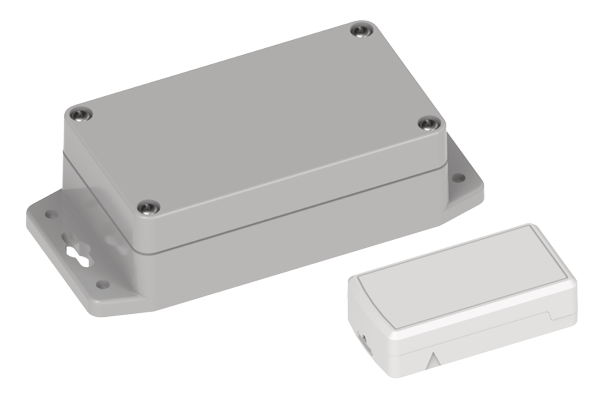
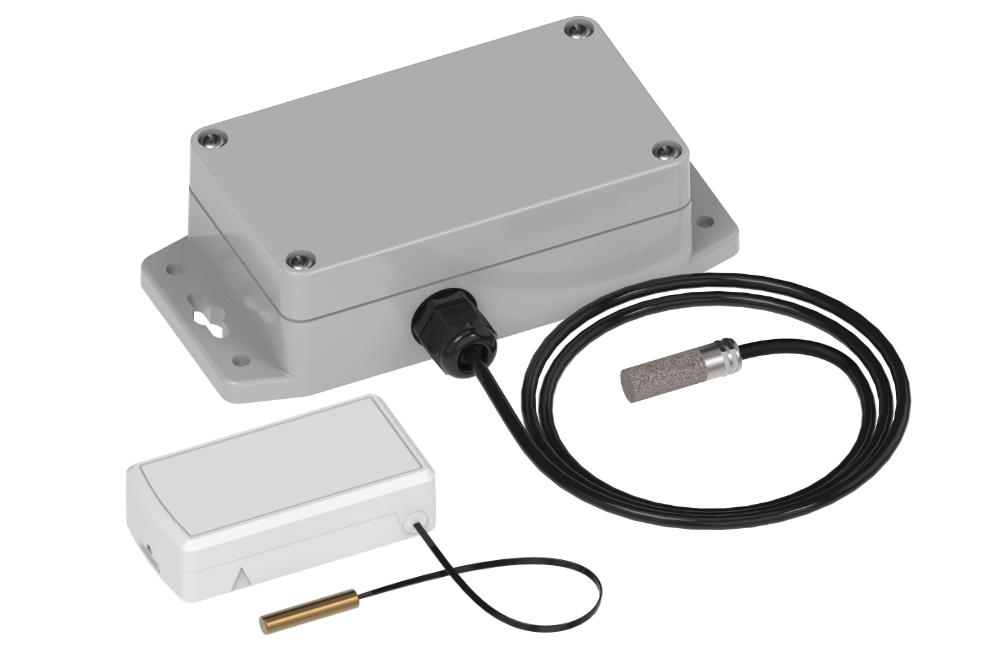
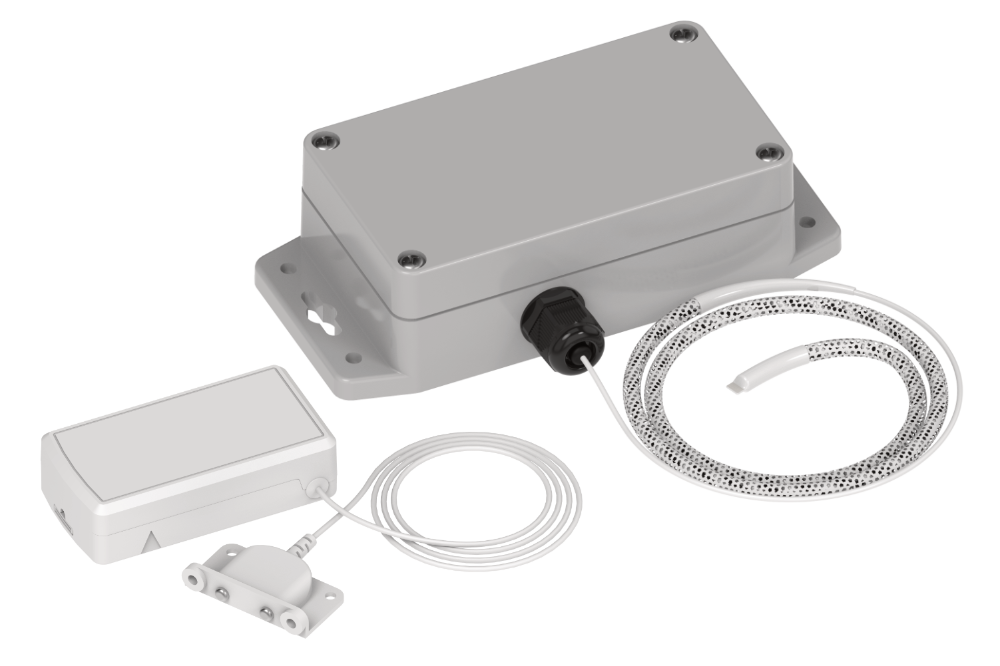
MultiTech Sensors That Support Retrofit Projects
Occupancy & Movement Sensors
Track space utilisation and occupancy patterns to support smarter lighting, heating, cooling, and ventilation strategies.
Temperature & Humidity sensors
Monitor indoor environmental conditions to improve occupant comfort, optimise HVAC performance, and identify damp or mould risks early.
Leak Detection Sensors
Detect water leaks quickly to minimise property damage, reduce maintenance costs, and prevent unnecessary water waste.
Where Retrofit Delivers the Greatest Impact
Healthcare Facilities
Healthcare organisations often operate around the clock, making efficiency improvements particularly valuable. Wireless sensing can help monitor environmental conditions, identify HVAC inefficiencies, and improve visibility across critical spaces without disrupting patient care.
Housing Providers
Housing associations and residential property managers can monitor temperature, humidity, and indoor environmental conditions across large property portfolios. This supports proactive maintenance strategies and helps identify risks before they become larger issues.
Commercial Buildings
Office environments can benefit from occupancy-based optimisation, improved energy management, and enhanced sustainability reporting. Building operators gain greater visibility into how spaces are used and where efficiency improvements can be achieved.
Education Campuses
Schools, colleges, and universities often manage diverse building estates. Wireless sensing enables consistent monitoring across multiple facilities while supporting energy-saving initiatives and improved learning environments.
A Practical Route to Decarbonisation
Decarbonisation does not always require large-scale redevelopment projects.
In many cases, meaningful progress begins with better visibility and smarter operational decisions.
By reducing unnecessary energy use, improving system performance, and extending the lifespan of existing assets, retrofit projects can deliver both environmental and financial benefits.
Organisations can implement improvements incrementally, prioritising high-impact opportunities while building a stronger data-driven foundation for future sustainability initiatives.
This makes retrofit one of the most accessible and practical pathways toward long-term climate goals.
Making Climate Action Measurable
World Environment Day serves as an important reminder that climate action must be both ambitious and achievable.
For organisations seeking practical ways to improve sustainability performance today, retrofitting existing buildings with wireless sensing provides a clear path forward. It delivers the visibility needed to identify inefficiencies, the insights required to support informed decisions, and the flexibility to scale improvements over time.
Rather than waiting for future developments or major capital projects, organisations can begin with the buildings they already manage – enhancing them with connected intelligence that drives measurable environmental and operational outcomes.
How MultiTech Supports Retrofit-Friendly Smart Buildings
MultiTech helps organisations modernise existing buildings through LoRaWAN-connected gateways and sensor solutions designed for scalable, low-disruption deployments.
By enabling reliable collection of environmental, occupancy, and energy data across single buildings or large estates, MultiTech provides the foundation for smarter building management, improved operational efficiency, and measurable sustainability progress.
Ready to turn building data into measurable climate action? Discover how MultiTech’s LoRaWAN solutions can help modernise existing buildings without major disruption.