
The Case for Wireless LoRaWAN® Sensors for Building Management
LoRaWAN Wireless Sensors for Building Management
Benefits, Cost Savings & Use Cases
For years, commercial and multitenant residential properties have employed centralized environmental monitoring and management systems. While making it possible to measure characteristics like temperature, lighting, and airflow, these control systems have almost always involved miles of wiring, which is expensive to install, repair, extend and replace. Adding further to the complexity, much existing wiring uses serial protocols, which limits distance and features that can be deployed.
Buildings owners, tenants and even governments and regulators are demanding increased capabilities such as presence detection, leak notification, air quality and security status.
Although wired sensors can provide some of these capabilities, the cost of adding or retrofitting existing buildings can become prohibitive.
In recent years, wireless sensors for building management and control have been introduced to the market. Specifically, Bluetooth, WiFi, Zigbee and some proprietary products have been available for some time. While each have their advantages, all suffer from common problems: lack or range, power requirements, cost, and closed systems.
LoRaWAN (Long Range Wide Area protocol) offers compelling advantages that are increasingly hard to ignore in modern buildings.
Advantages to LoRaWAN Wireless Sensors Cost savings
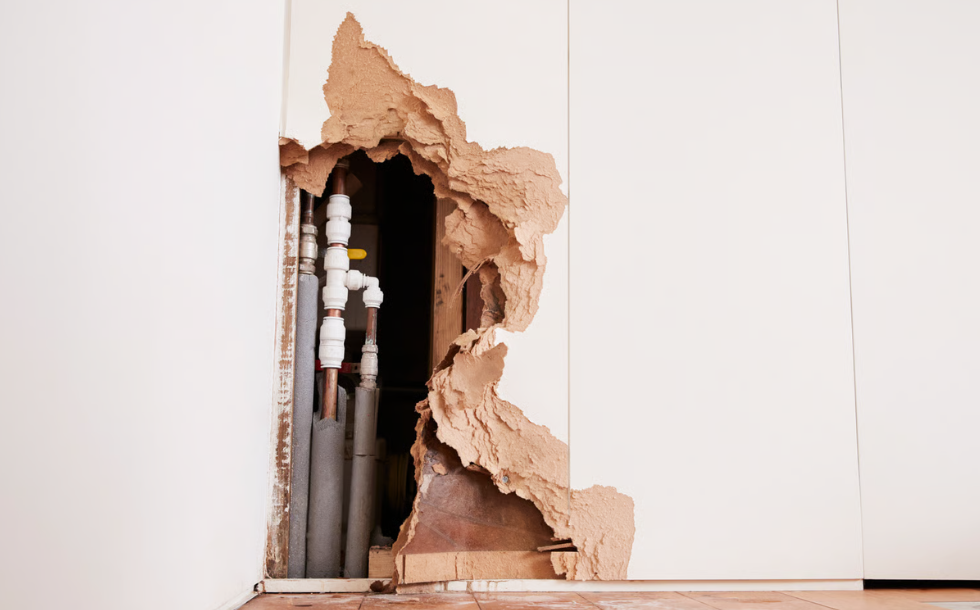
Wireless sensors are very inexpensive to purchase, install and use. Conversely, wired sensors require conduit, cabling, junction boxes, terminations, and often licensed electricians to install. Cost can quickly escalate for retrofit projects with the need for ceiling access, wall penetration, fire-stopping, asbestos mitigation, and patch-and-paint work. Wireless sensors eliminate nearly all of this. A LoRaWAN sensor can be mounted with screws or adhesive and powered by a long-life battery. The result is dramatically lower installation cost, with fewer trades involved and much more predictable project budgets.
Speed of deployment
Wireless sensors enable rapid deployment. A wired sensor rollout can take weeks or months, especially in occupied buildings where work is disruptive or must be done after hours. LoRaWAN sensors can be installed and commissioned in minutes per device. A single gateway can cover multiple floors or a building, allowing hundreds of sensors to come online quickly. This speed is especially valuable for time-sensitive initiatives such as energy optimization, indoor air quality monitoring and compliance reporting.
Convenience and flexibility
Once installed, wireless sensors provide flexibility that wired systems can’t. Sensors can be relocated, added, or repurposed without pulling new cable. Spaces change—offices become conference rooms, storage areas become occupied spaces, tenants reconfigure layouts—and LoRaWAN networks can be modified easily.
Minimal tenant disruption
Tenant disruption is a major concern in commercial buildings, healthcare facilities, schools, and multi-tenant offices. Wired installations often involve noise, dust, and temporary space closures. Wireless sensor deployment is quiet, clean, and non-intrusive, often completed during normal business hours without occupants even noticing. This is a significant advantage for tenant satisfaction and retention, and facilities staff who must coordinate access.
New capabilities not feasible with wired sensors
LoRaWAN sensors enable entirely new use cases that are impractical or cost-prohibitive with wired systems. Battery-powered sensors can be installed in locations where wiring is impossible or uneconomical—stairwells, remote mechanical spaces, temporary structures, or legacy buildings with architectural constraints. LoRaWAN also supports a wide variety of sensor types beyond traditional temperature and humidity, including occupancy, leak detection, differential pressure, vibration, door status, IAQ metrics, and asset tracking. Many of these sensors provide high-resolution data, event-driven reporting, and long battery life measured in years.
Long-term operational value
Finally, LoRaWAN sensors integrate well with modern analytics platforms, cloud services, and building automation systems, enabling data-driven insights rather than simple point monitoring. Facilities teams gain visibility into spaces and systems that were previously unmonitored, improving energy efficiency, maintenance response, and occupant comfort—all without the ongoing burden of maintaining complex wired infrastructure.