Table of Contents

About <a class="wpg-linkify wpg-tooltip" title="<h3 class="wpg-tooltip-title"><span class="wpg-tooltip-term-title">LoRa Protocol — LoRaWAN</span></h3><div class="wpg-tooltip-content"><p><a href="https://multitech.com/iot-wiki/"><br /> IoT Wiki & Glossary<br /> </a></p> <p>LoRa Protocol or LoRaWAN (Long Range Wide Area Network) is a wireless communication protocol designed for Low-Power Wide Area Networks (LPWAN) used in Internet of Things (IoT) applications. It is a low-power, long-range wireless protocol that enables the transmission of small data packets over long distances with low power consumption, making it ideal for IoT applications that require low data rates and long-range connectivity.</p> <p>LoRaWAN operates in the unlicensed spectrum and uses chirp spread spectrum modulation to enable long-range communication while maintaining a low power consumption. The LoRaWAN protocol also uses a star topology, where individual end devices communicate with a central gateway, enabling the network to cover large areas with minimal infrastructure.</p> <h3><strong>The LoRaWAN protocol has several features that make it suitable for a wide range of IoT applications, including:</strong></h3> <ol> <li><strong>Long range</strong>: LoRaWAN can transmit data over several kilometers/miles in an urban environment and up to tens of kilometers in rural areas, providing wide coverage with minimal infrastructure.</li> <li><strong>Low power consumption:</strong> LoRaWAN devices can operate on battery power for years, making them ideal for IoT applications where frequent battery replacements are not practical.</li> <li><strong>Low cost:</strong> LoRaWAN is a low-cost solution, as it uses unlicensed spectrum and requires minimal infrastructure to operate.</li> <li><strong>Secure:</strong> LoRaWAN provides end-to-end encryption, ensuring secure communication between devices and the central gateway.</li> </ol> <p>LoRaWAN is used in a variety of IoT applications, such as smart cities, industrial automation, smart agriculture, and asset tracking, where long-range, low-power connectivity is essential. Overall, LoRaWAN is a key technology in the LPWAN ecosystem, providing a reliable and cost-effective way to connect a large number of IoT devices over long distances.</p> <p class="wpg-read-more"><a href="https://multitech.com/iot-wiki/lora-protocol-lorawan/">Read More</a></p></div>" href="https://multitech.com/iot-wiki/lora-protocol-lorawan/" >LoRaWAN</a>® Wireless <a class="wpg-linkify wpg-tooltip" title="<h3 class="wpg-tooltip-title"><span class="wpg-tooltip-term-title">IoT Devices</span></h3><div class="wpg-tooltip-content"><p><a href="https://multitech.com/iot-wiki/"><br /> IoT Wiki & Glossary<br /> </a></p> <h2>What Are IoT Devices?</h2> <p>IoT devices are pieces of hardware; such as sensors, actuators, gadgets, appliances, or machines; that are programmed for specific applications and can transmit data over the internet or other networks. They can be embedded into mobile devices, industrial equipment, environmental sensors, medical devices, and more.</p> <p><strong>In industrial deployments, IoT devices typically include:</strong></p> <ul> <li>Wireless sensors</li> <li>LoRaWAN end devices</li> <li>Industrial gateways</li> <li>Cellular routers</li> <li>Embedded communication modules</li> <li>Edge computing devices</li> </ul> <blockquote> <p><strong>IoT (Internet of Things) devices</strong> extend internet connectivity beyond traditional computing hardware like laptops and smartphones. By embedding sensors, processors, and network adapters into everyday objects, IoT technology enables these objects to collect data, communicate over networks, and be remotely monitored and controlled — all while continuing to deliver their primary function.</p> </blockquote> <h4>Why IoT Devices Matter</h4> <p>IoT devices are increasingly using AI and machine learning to bring intelligence and autonomy to systems and processes; from autonomous driving and industrial smart manufacturing to medical equipment and home automation. Many of these devices are small, power-constrained, microcontroller-based systems that demand more on-device processing rather than relying on cloud-based approaches.</p> <p>For businesses, IoT devices deliver operational data that drives efficiency, reduces downtime through predictive maintenance, and enables entirely new service models. Delivering value through rolling less trucks to monitoring multiple facilities to track power, water, leak detection and more.</p> <p> Connected IoT Devices predicted by 2030<br /> 0<br /> B+</p> <p>3 Primary device categories: Consumer IoT Devices, Enterprise IoT Devices and Industrial IoT Devices. Key growth areas are emerging in AI (Artificial Intelligence) where IoT Devices add a real world layer of environmental knowledge. Learn more about how <a href="https://multitech.com/we-make-ai-sense/"><strong>MultiTech Makes AI Sense</strong></a>. MultiTech focuses on the two below manufacturing IoT Devices and Gateways.</p> <h2>Enterprise IoT</h2> <p> Edge devices designed for businesses to maintain facilities and improve operational efficiency. Includes smart sensors for conference rooms, RFID inventory tracking, and smart security. </p> <h2>Industrial IoT (IIoT)</h2> <p>Sensors and actuators that monitor manufacturing processes, predict when parts need replacement, and prevent unexpected downtime. Often enhanced with AI integration.</p> <h2>Common Examples of IoT Devices</h2> <p>IoT sensors detect physical conditions and convert them into digital data. Connecting devices form an ecosystem where every device communicates with other related devices to automate tasks across facilities, enterprise, and in industrial environments.</p> <p> <a href="https://multitech.com/all-products/wireless-sensors/temperature-air-wireless-sensors/"><br /> Temperature & Humidity<br /> </a><br /> <a href="https://multitech.com/all-products/wireless-sensors/push-button-sensors/"><br /> Push Button Devices<br /> </a><br /> <a href="https://multitech.com/all-products/wireless-sensors/wireless-liquid-sensors/"><br /> Leak Detection<br /> </a><br /> <a href="https://multitech.com/all-products/wireless-sensors/movement-sensors/"><br /> Motion Detection<br /> </a><br /> <a href="https://multitech.com/all-products/wireless-sensors/proximity-sensors/"><br /> Proximity Devices<br /> </a><br /> <a href="https://multitech.com/all-products/wireless-sensors/industrial-sensors/"><br /> Industrial Devices<br /> </a><br /> <a href="https://multitech.com/current-transformer/"><br /> Current transformers (CTs)<br /> </a><br /> <a href="#"><br /> Water Pulse Counter<br /> </a><br /> In industrial settings, sensors are often battery-powered and designed for long-range, low-power communication using LPWAN technologies like LoRaWAN. </p> <h2>How Do IoT Devices Work?</h2> <p> While IoT devices vary widely in functionality, they share a common operating pattern. Each device is a physical object designed to interact with the real world — whether sensing environmental conditions, monitoring vital signs, or controlling a mechanical system. </p> <ul> <li> 1<br /> Sense<br /> The device uses embedded sensors to detect conditions in its environment; temperature, motion, pressure, light, or other physical signals. </li> <li> 2<br /> Connect<br /> An integrated network adapter (LoRaWAN, Wi-Fi, Bluetooth, cellular, or Ethernet) connects the device to the network and acquires an IP address via DHCP. </li> <li> 3<br /> Transmit<br /> Sensor data is streamed outbound; to an IoT gateway, edge device, or directly to the cloud. Most IoT traffic flows outward from the device. </li> <li> 4<br /> Process & Act<br /> Data is analyzed locally at the edge or in the cloud. Insights trigger actions, alerts, automated responses, firmware updates, or commands sent back to the device. </li> </ul> <h2>The Role of IoT Gateways</h2> <p> An IoT gateway aggregates data from multiple sensors and securely transmits it to cloud platforms or enterprise systems.</p> <p>IoT gateways serve as the bridge between devices and the cloud. Operating like network routers, they move data bidirectionally:  outbound data goes to the cloud, while incoming traffic handles administrative tasks like firmware updates. Intelligent gateways can also preprocess data at the network edge before sending it to the cloud, handle multiple IoT protocols, and perform local computing tasks.</p> <h4>Industrial IoT gateways provide:</h4> <h4>Protocol translation (e.g., LoRaWAN to IP)</h4> <h4>Secure backhaul via Ethernet or cellular</h4> <h4>Local data processing (edge computing)</h4> <h4>Integration with BACnet, Modbus, MQTT, or REST APIs</h4> <p> Gateways are a critical for bridging field IoT devices with IT systems. Truly connecting data to decisions. </p> <h2>IoT Sensors vs IoT Gateways: What’s the Difference?</h2> <table> <thead> <tr> <th><strong>IoT Sensor</strong></th> <th><strong>IoT Gateway</strong></th> </tr> </thead> <tbody> <tr> <td>Collects physical data</td> <td>Aggregates sensor data</td> </tr> <tr> <td>Battery-powered</td> <td>Line-powered or industrial-grade</td> </tr> <tr> <td>Communicates via LPWAN or short-range</td> <td>Connects to cloud or enterprise systems</td> </tr> <tr> <td>Deployed in large quantities</td> <td>Deployed strategically per site</td> </tr> </tbody> </table> <blockquote> <p>Sensors create data. Gateways enable connectivity.</p> </blockquote> <h2>IoT Connectivity & Protocols</h2> <p>The networking and communication protocols used with IoT devices depend on the specific application. Each protocol involves tradeoffs in power consumption, range, and bandwidth that must be considered when designing an IoT solution.</p> <table style="height: 1344px;" width="620"> <thead> <tr> <th> <h3><strong>Protocol / Technology</strong></h3> </th> <th> <h3><strong>Type</strong></h3> </th> <th> <h3><strong>Range</strong></h3> </th> <th> <h3><strong>Power Profile</strong></h3> </th> <th> <h3><strong>Best For</strong></h3> </th> <th> <h3><strong>Where It Makes the Most Sense</strong></h3> </th> </tr> </thead> <tbody> <tr> <td> <h3><strong>LoRaWAN®</strong></h3> </td> <td>LPWAN Wireless</td> <td>Long-range (miles/km)</td> <td>Ultra-low power (5–10+ year battery life)</td> <td>Distributed sensors, large facilities, campuses, utilities</td> <td>✔ Smart buildings ✔ Energy monitoring ✔ Leak detection ✔ Utility metering ✔ Large-scale sensor networks</td> </tr> <tr> <td> <h3><strong>Cellular (LTE Cat 1, LTE-M, NB-IoT, 5G)</strong></h3> </td> <td>Wide-Area Wireless</td> <td>Nationwide / Global</td> <td>Moderate to higher power</td> <td>Remote assets, mobile equipment, primary or backup WAN</td> <td>✔ Remote infrastructure ✔ Oil & gas ✔ Fleet & mobile assets ✔ Backup connectivity ✔ High-bandwidth needs</td> </tr> <tr> <td> <h3>MQTT</h3> </td> <td>Messaging Protocol</td> <td>Network dependent</td> <td>Lightweight</td> <td>Cloud communication from gateways or devices</td> <td>Ideal over Cellular or Ethernet backhaul</td> </tr> <tr> <td> <h3>CoAP</h3> </td> <td>Application Protocol</td> <td>Network dependent</td> <td>Very low overhead</td> <td>REST-style communication for constrained devices</td> <td>Edge devices in LPWAN or local networks</td> </tr> <tr> <td> <h3>Zigbee</h3> </td> <td>Short-Range Wireless</td> <td>Short (10–100m)</td> <td>Low power</td> <td>Smart home and small building automation</td> <td>Indoor mesh networks with dense node placement</td> </tr> <tr> <td> <h3>BLE</h3> </td> <td>Short-Range Wireless</td> <td>Very short (5–30m typical)</td> <td>Very low power</td> <td>Wearables, beacons, proximity detection</td> <td>Personal devices, room-level deployments</td> </tr> <tr> <td> <h3><strong>Z-Wave</strong></h3> </td> <td>Short-Range Wireless</td> <td>Short (30–100m)</td> <td>Low power</td> <td>Residential automation</td> <td>Home automation environments</td> </tr> <tr> <td> <h3><strong>AMQP</strong></h3> </td> <td>Messaging Protocol</td> <td>Network dependent</td> <td>Moderate</td> <td>Enterprise message queuing</td> <td>Backend enterprise systems</td> </tr> <tr> <td> <h3><strong>DDS</strong></h3> </td> <td>Data Distribution Protocol</td> <td>Network dependent</td> <td>Higher overhead</td> <td>Mission-critical, real-time systems</td> <td>Aerospace, defense, robotics</td> </tr> </tbody> </table> <h2>IoT Device Management</h2> <blockquote> <p>Large-scale deployments require centralized management.</p> </blockquote> <p>IoT device management encompasses the processes of integrating, remote provisioning, firmware updates, organizing, security configurations monitoring, fleet visibility and remotely managing internet-enabled devices at scale. Effective device management addresses challenges around security, interoperability, scalability, and connectivity throughout each device's entire lifecycle.</p> <blockquote> <p>Without device management, scaling beyond pilot deployments becomes operationally complex.</p> </blockquote> <h2>Device Management Lifecycle</h2> <p> The typical lifecycle includes registration and activation, authentication and authorization, initial configuration, provisioning, ongoing monitoring and diagnostics, troubleshooting, and firmware updates. Standardized protocols like OMA Device Management (for mobile devices) and OMA Lightweight M2M (for sensor networks) facilitate these processes, with enterprise-grade management services available from providers like AWS IoT, Google Cloud IoT, IBM Watson IoT, and Azure IoT Hub. </p> <h2>Frequently Asked Questions About IoT Devices</h2> <p>Below are some of the most common questions we get around IoT Devices - if you still have questions, reach out - our technical support team can help answer any questions you may have or get you to someone that can. <a href="https://multitech.com/contact-us/">Contact Us</a></p> <p> What are IoT devices used for? </p> <p>IoT devices are used for monitoring, automation, data collection, and system optimization across industrial, commercial, and infrastructure environments.</p> <p> What is the difference between IoT and IIoT? </p> <p>IoT (Internet of Things) is the broad term for all internet-connected devices, while IIoT (Industrial Internet of Things) specifically refers to IoT devices deployed in industrial settings like factories, manufacturing plants, and utility infrastructure. IIoT devices typically focus on monitoring processes, predictive maintenance, and operational optimization, and they often require higher reliability and security standards.</p> <p> How long do IoT sensors last? </p> <p>Battery-powered LPWAN sensors can last 5–10 years depending on transmission frequency and environmental conditions.</p> <p> How many IoT devices are there in the world? </p> <p>According to IoT Analytics’ 2024 report, there are billions of connected IoT devices currently in use, with projections exceeding 41 billion by 2030. Growth is driven by 5G adoption, AI-enhanced edge computing, smart home expansion, and healthcare IoT applications.</p> <p> Are IoT devices secure? </p> <p>Industrial IoT devices include encryption, authentication, and secure firmware controls to meet enterprise security standards.</p> <p> Are IoT devices safe to use? </p> <p>IoT devices can be safe when properly secured. Best practices include using strong, unique passwords, enabling multi-factor authentication, keeping firmware updated, segmenting IoT devices onto a separate network, and purchasing from reputable manufacturers (like MultiTech).</p> <p> What is an IoT gateway? </p> <p>An IoT gateway is a physical device or software application that acts as the connection point between IoT devices and the cloud. It routes data bidirectionally, supports multiple IoT protocols, and can perform edge preprocessing to reduce the amount of raw data sent to the cloud.</p> <h2>Standards & Legislation</h2> <p> The IoT Cybersecurity Improvement Act of 2020 directed NIST to develop standards for IoT device use and management. Key frameworks include ISO/IEC 30141:2024 for IoT reference architecture, ISO/IEC 21823-1:2019 for IoT interoperability, and NIST SP 800-213 for establishing cybersecurity protections. The FCC's U.S. Cyber Trust Mark program (launched 2023) provides consumer-facing labels for products meeting NIST security criteria.</p> <p class="wpg-read-more"><a href="https://multitech.com/iot-wiki/iot-devices/">Read More</a></p></div>" href="https://multitech.com/iot-wiki/iot-devices/" >Industrial Sensors</a>

About LoRaWAN® Wireless Industrial Sensors

MultiTech LoRaWAN® Wireless Industrial Sensors can be used for a variety of applications across numerous industries. The Wireless Voltage and 4-20mA Current Loop sensors are typically used in applications where there is a need to monitor and measure voltage or current, such as the health of a battery, detecting a power failure, and machinery monitoring health. These industrial sensors are designed for outdoor/industrial use.

LoRaWAN wireless sensors make it easy to connect sensor data to your applications. Best in class RF performance enables sensors to work in environments where others fail. Advanced power management provides maximum battery life. Sensors can be configured over the air, enabling them to be optimized, before and after installation, for the most optimum reporting intervals or thresholds to provide the data that is important to your application, when you need it.

BENEFITS

  • Open architecture for flexible integration with any LoRaWAN network
  • Also available is an optional web-based service for provisioning, monitoring, and configuration of sensors in the field
  • Seamlessly integrate with any LoRaWAN gateway in addition to the MultiTech portfolio of LoRaWAN gateways

FEATURES

  • Based on LoRaWAN wireless technology
  • Optimized Radio performance by balancing performance with long battery life and excellent network performance
  • Very long range, up to several miles
  • Excellent wireless penetration through structures such as walls and floors
  • Automatic error reporting through supervisory messages
  • Over the air configuration
  • Seamless integration into any cloud service and BACnet integration through MultiTech Gateways

Download PDF

Ordering Options

Ordering Part Number Description Region
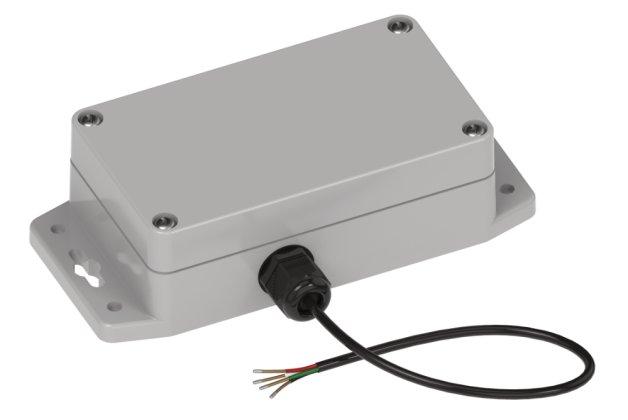
RS306-VM30-US LoRaWAN VM30 Voltage Sensor for Outdoor/Industrial Use (1 Pk)

Canada

United States

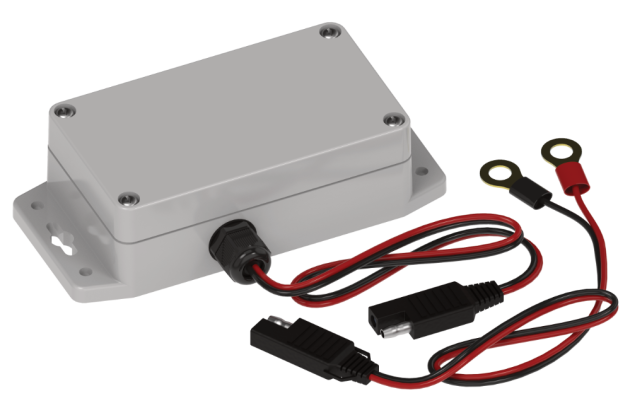
RBS306-420MA-US LoRaWAN 4-20mA Current Loop Sensor/Bridge for Outdoor/Industrial Use (1 Pk)

Canada

United States

LoRaWAN® Wireless IoT Sensors - Long-range wireless sensors for the Internet of Things (IoT)

MultiTech LoRaWAN® wireless sensors, utilize the LoRaWAN wireless standard and are all engineered for long-range, low cost, and extended battery life applications. These sensors deliver critical asset information so you understand what's happening and can react quickly when needed.
Sensor Description Application
LoRaWAN Voltage Sensor for Outdoor/Industrial Use The LoRaWAN Voltage Sensor measures a voltage between 0-30V with a precision of 10mV. Available alerts include upper and lower threshold crossing, incremental change, and periodic interval.
  • Battery health
  • Power failure detection
  • Load & fault detection
  • Glass break detection
  • Security applications
  • Motor failure detection
LoRaWAN 4-20mA Current Loop Sensor for Outdoor/Industrial Use The LoRaWAN 4-20mA Current Loop Sensor measures amperage of a 4-20mA current loop with a precision of 10uA. Available alerts include upper and lower threshold crossing, incremental change, and periodic interval. The 4-20mA sensor can also be used as a bridge device to enable a wide variety of sensors with only a 4-20mA output.
  • Monitor industrial process control outputs
  • Monitor signaling to control values
  • Enable existing 4-20mA sensors
  • General monitoring of 4-20mA industrial output

MultiTech Device Management Console

The MultiTech Console is an optional web-based fully integrated solution that provides sensor configuration, LoRaWAN Network Server management, configurable alerts and notifications. Sensor visualization enables you to deploy and validate your sensor-to-cloud solution immediately, without spending weeks or months on system integration efforts.

LEARN MORE

Visit: https://www.radiobridge.com/software/device-management-console

Specifications

Category Description
Operational Characteristics
LoRaWAN Region

Canada/United States

Sensor Type

LoRaWAN 4-20mA Current Loop

(Outdoor/Industrial Use)

LoRaWAN 0-30V Voltage Sensor
Part Number RBS306-420MA-US RBS306-VM30-US
LoRa® Wireless
Frequency Band (MHz) 902-928
Channel Plan US915
Protocol LoRaWAN compliant
Antenna Peak (typical) Antenna Gain 0.3 dBi 0.3 dBi
Power
Battery Powered No Yes
Battery Type / Qty 5-24V (Customer Supplied Power) 2x CR123 Battery
User Replaceable Yes
Physical Characteristics
Sensor Type MilliAmp Measurement Voltmeter Probe
Physical Dimensions (L×W×H)

5.12 x 2.56 x 1.58

(130.05mm x 65.02mm x 40.13mm)

5.12 x 2.56 x 1.58

(130.05mm x 65.02mm x 40.13mm)

Physical Weight 162g 240g
Enclosure Type ABS Plastic, IP54, outdoor rated ABS Plastic, IP54, outdoor rated
Mounting

Screw (includes Tamper)

Includes Wiring Harness

Screw (includes Tamper)
Range 4-20mA 0 to 3000mV
Resolution 10uA 10mV
Accuracy 10uA 0.6V Half Scale
Environmental
Operating Temperature -40°C to +70°C -40°C to +70°C
Operating Humidity 10% to 90% (non-condensing)
Storage Temperature -40°C to +45°C (higher temperatures may degrade battery)
Certifications
Compliance FCC/IC, REACH, ROHS FCC/IC, REACH, ROHS
Warranty
Warranty 2-Years / www.multitech.com/legal/warranty

See user guide for more information.